Decrease Inexperienced River Lake close to Pinedale, Wyoming. Photograph: Bridger Teton Nationwide Forest
Certain, locations like Bozeman, Jackson Gap, and Vail are nice fly-fishing cities, however they’re definitely not off the crushed path. In the event you’re trying to make a visit out West however don’t need to do the identical, previous factor, the place are you able to go? Writing in Hatch Journal, Chris Hunt profiles 4 cities in Montana, Colorado, and Wyoming the place you would possibly discover somewhat extra room to roam and discover. Whereas these are hardly undiscovered gems, they’re definitely much less traveled than a number of the iconic locations within the Rockies.
Life Cycle of Myxobolus cerebralis, the parasite that causes whirling illness. by way of mtpr.org
Thirty years in the past, the fly-fishing world was terrified by the invention of whirling illness in Montana’s trout inhabitants. Would the rivers of Large Sky Nation now not reside as much as their legendary standing? Whereas the worst-case-scenario predictions by no means got here true, some waters, such because the Madison, noticed their rainbow populations scale back by as a lot as 95%.
Whirling illness continues to be current, however we don’t hear a lot about it. Why not? A captivating interview on Montana Public Radio revisits the preliminary panic about whirling illness, in addition to the decades-long restoration that’s nonetheless a little bit of a thriller.
Traces of the toxic chemical have been present in brook trout many years after DDT was banned. Picture: Charles Hildick-Smith
The persistence of chemical substances within the surroundings is a widespread concern amongst biologists, and a current Canadian examine demonstrates why constant monitoring is so vital:
Residues of the insecticide DDT have been discovered to persist at “alarming charges” in trout even after 70 years, doubtlessly posing a major hazard to people and wildlife that eat the fish, analysis has discovered.
Dichlorodiphenyltrichloroethane, generally known as DDT, was used on forested land in New Brunswick, Canada, from 1952 to 1968. The researchers discovered traces of it remained in brook trout in some lakes, usually at ranges 10 occasions larger than the really helpful security threshold for wildlife.
“DDT is a possible carcinogen that we haven’t utilized in 70 years right here [Canada], but it’s ample in fish and lake mud all through a lot of the province at shockingly excessive ranges,” stated Josh Kurek, an affiliate professor in environmental change and aquatic biomonitoring at Mount Allison College in Canada and lead creator of the analysis.
This week’s Tying Tuesday contains a massive attractor dry, a deep-diving nymph, and a big saltwater baitfish imitation. We kick issues off with a video from McFly Angler, who final week confirmed us the right way to tie the Madam X and now follows up with a parachute model referred to as the PMX. That is my go-to sample for hopper-dropper setups on the mountain streams close to my dwelling in Vermont. It floats properly, is simple to see, and trout will take it for a stonefly, caddisfly, or grasshopper.
PMX Hook: 2X-long nymph hook (right here a Risen 9231), dimension 12. Thread: Brown, 6/0 or 140-denier. Put up: White Polypro Yarn. Tail: Pure deer hair. Rear Physique: Peacock herl. Physique Accent: Purple floss. Wing: Pure deer hair, cleaned and stacked. Hackle:Golden badger, grizzly, or brown hackle. Legs:Speckled tan MFC Centipede Legs, medium. Adhesive #1: UV-cure resin (right here Solarez Extremely Skinny). Thorax: Peacock herl. Adhesive #2: UV-cure resin (right here Solarez Extremely Skinny).
Subsequent, Simon from the Caddis Fly Angling Store in Eugene, Oregon, ties a unbelievable Jigged March Brown Nymph. March Browns are within the clinger household of mayflies, they usually have a large, flat physique form. Their legs are additionally very pronounced, so Simon makes use of a mix of Pheasant and Partridge to realize legs that significantly protrude from the nymph. The result’s a fly with a selected silhouette that trout will acknowledge.
Jigged March Brown Nymph Hook: Jig nymph hook (right here an Ahrex 555), dimension 14. Bead: Copper Slotted Tungsten Bead, 5/32-inch or 3.8mm. Thread: Black, 6/0 or 140-denier. Tail:Pheasant tail fibers. Underbody:Copper Uni Medium Tender Wire. Rib:Copper Uni Medium Tender Wire. Stomach: Pheasant tail. Wing case: Cinnamon tipped turkey tail. Legs #1: Hungarian Partridge fibers. Thorax:Peacock herl. Legs #2:Pheasant tail fibers. Adhesive: UV-cure resin (right here Solarez Bone Dry).
Lastly, well-known New England saltwater tier Joe Calcavecchia demonstrates how he ties The Streaker, a previous sample from the 1979 e-book Streamers & Bucktails the Massive Fish Flies by Joseph D. Bates Jr. This sample will work in each recent and salt water, for any species of predatory fish: stripers, bluefish, bonito, bluefin tuna, false albacore and plenty of extra. This can be a very previous sample that you simply simply don’t see anymore however Joe nonetheless ties lots of them, and the fish loves them!
Dave Whitlock reveals off a wonderful largemouth from a 1985 story. Picture by way of Fly Fisherman
Forty years in the past, writing within the June 1985 difficulty of Fly Fisherman journal, Dave Whitlock instructed a novel strategy to catching largemouth bass. On the time, streamers and topwater flies have been regarded as the easiest way to catch bucketmouths, however Whitlock found that the nymphs he fished for panfish have been additionally hooking bass.
One of many largest bass I ever hooked took a barbless dimension 12 caddis pupa I used to be swimming throughout an enormous mattress of bluegill and redear nests on a small municipal lake close to Bartlesville, Oklahoma. The bass got here like an enormous automotive out of nowhere, scattering panfish like a covey of quail. Then it stopped and sipped within the tiny nymph extra delicately than any hand-size bluegill may. With a chill working up my again and neck, I set the hook. The fragile motion stopped instantly and a severe battle started. First, the massive bass rushed off the shallow nest pocket-cover to deep water. After a number of nervous give-and-cake exchanges, the largemouth got here up for a thrashing, head-shaking floor vault.
These techniques clearly nonetheless work at the moment, and you could discover that fish which have change into cautious of larger flies will nonetheless eat a nymph.
From April 21 to Could 11, TU Costa 5 Rivers School fly-fishing golf equipment from throughout the nation are going head-to-head to see who can elevate probably the most cash for Casting for Restoration—which offers all-expense-paid fly fishing retreats for girls in therapy or restoration from breast most cancers. It’s the following era of conservation-minded anglers stepping as much as assist the ladies who’ve formed their lives.
The TU Costa 5 Rivers Program is a nationwide community of school fly-fishing golf equipment. Every membership is managed totally by college students and operates autonomously as they work to have interaction fly anglers of all ability ranges in bringing the Trout Limitless mission to life on their campus.
The highest 3 fundraising golf equipment win an end-of-year get together, in addition to prizes from Costa, Turtlebox, Yeti, Ross Reels, and Yakoda! Plus, there are extra enjoyable prizes obtainable all through the marketing campaign.
Methods to Get Concerned
Fly-Fishing Golf equipment: Begin fundraising! The membership that raises probably the most wins!
Donors: Help your favourite membership’s efforts, and inform us whom you’re honoring!
Everybody: Unfold the phrase, problem mates, and assist us make waves for girls in want!
And should you’re , we’d be thrilled to share extra in regards to the real-world influence we’re making at Casting for Restoration—particularly as we stay up for our thirtieth anniversary subsequent yr. Greater than 12,000 girls have skilled a life-changing Casting for Restoration retreat, and we’re simply getting began.
The Fly Fishing Movie Tour started with a small group of individuals on the lookout for one thing recent—one thing one thing that represented he power, grit, and soul of fly fishing. At this time, these movies are a part of a brand new wave of storytelling in fly fishing, and this week’s visitor on the “Moist Fly Swing Podcast,” RA Beattie, has been there for the reason that starting.
On this episode, RA shares his journey and highlights from his movies, together with The Silent Spotter, a narrative a few deaf information. We additionally dive into his reference to Clyde the Automobile and the way he stays motivated regardless of adjustments within the trade.
Click on the “Play” button under to take heed to the total episode.
Annually, the California Division of Fish and Wildlife (CDFW) rigorously counts juvenile and grownup coho salmon in North Coast rivers and streams. This work is particularly essential for monitoring the standing of endangered populations of Central California Coast (CCC) coho.
Final winter, CDFW workers realized they have been seeing distinctive numbers of grownup salmon returning to Mendocino’s coastal streams throughout their spawning run. When the monitoring season was over and the numbers have been crunched, everybody working to get better these populations received some really inspiring information:
Final yr, CCC coho salmon returns surged to their highest numbers since intensive monitoring started. The Noyo and Ten Mile Rivers exceeded the federal Endangered Species Act restoration targets, and the Garcia and Huge Rivers noticed document salmon returns.
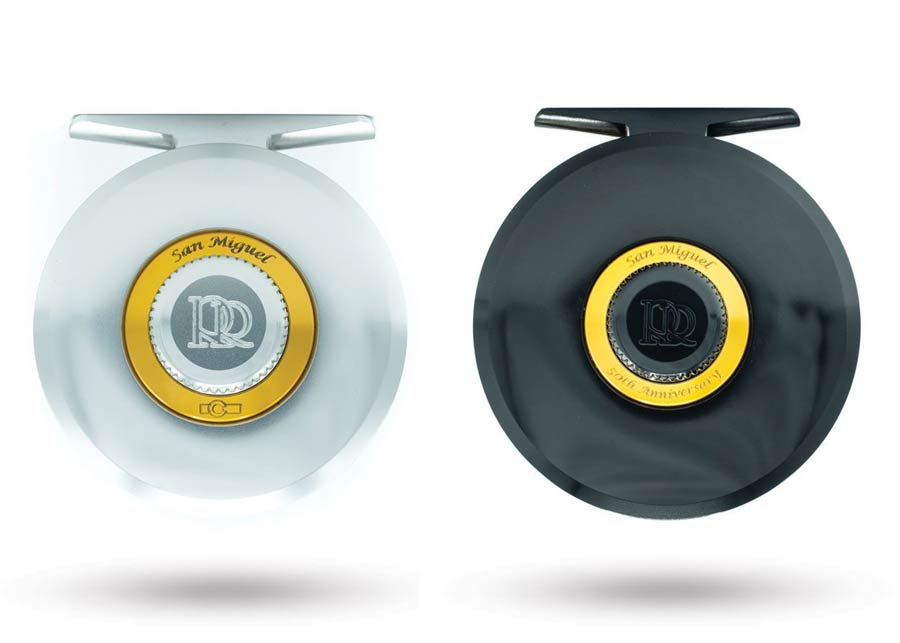
Ross Reels has introduced the return of the well-regarded San Miguel fly reel. Initially launched greater than 20 years in the past, the San Miguel has been absolutely redesigned in Ross Reels’ Colorado manufacturing unit, mixing trendy machining and supplies with the basic parts that made the unique iconic.
The brand new San Miguel incorporates a polished high-gloss black, platinum, gold, and particular fiftieth Anniversary end on a stable body, and the famend Artwork Deco porting. It additionally boasts a wide-range adjustable sealed drag system and a canvas micarta deal with, a fabric utilized in high-end customized knives to enhance grip when moist. Ross additionally features a separate outsized drag knob to optionally press match over the usual drag knob, making it even simpler to seek out, and exactly alter on the water. The massive-arbor spool is accentuated by a machined stainless-steel push-button launch, combining basic enchantment with efficiency.
The up to date San Miguel is on the market in 3/4, 4/5, 5/6, and seven/8 sizes.
The San Miguel fly reel is on the market now by way of approved Ross Reels sellers and on-line
A brown drake mayfly, one of many many species not discovered within the higher East Department of the Delaware, probably as a result of the water is just too chilly. Photograph courtesy of River Reporter
In 1976, New York Gov. Hugh Carey signed laws establishing minimal water flows for summer season and winter under the dams of the Delaware River system. Angler noticed the advantages of those new water regimes virtually instantly, within the type of larger, higher hatches of aquatic bugs. So extra water equals higher fishing, proper? Possibly not.
Within the 4 a long time since that preliminary laws, flows have been raised twice and at the moment are twice the unique CFS. This makes the water under the dam on the East Department colder for longer every summer season. Immediately, hatches at the moment are later, sparser, and in some circumstances virtually non-existant.
Writing in River Reporter, Tony Bonavist suggests one thing he is aware of goes towards typical knowledge: the colder water is definitely the trigger of the insect decline:
“After we focus on the life historical past of Catskill mayflies, we should take into account that earlier than reservoirs and chilly backside releases, all species of this order had been uncovered to excessive modifications in water temperature. Whereas winter temperatures registered within the mid-30s, summer season temperatures might rise nicely into the 80s. Because of this, Catskill mayflies advanced over many hundreds of years as organisms topic to excessive water temperature change.
When those self same species that advanced underneath these circumstances had been uncovered to very chilly homogenous water temperatures of fifty levels Fahrenheit, many couldn’t survive.
Based mostly on this background info and my observations alongside the higher East Department, I imagine that the rise in chilly backside water from Pepacton Reservoir to 140 CFS throughout the summer season is simply too chilly for many species of our indigenous mayflies.”